Navigating Morality and Governance: The Role of Desire
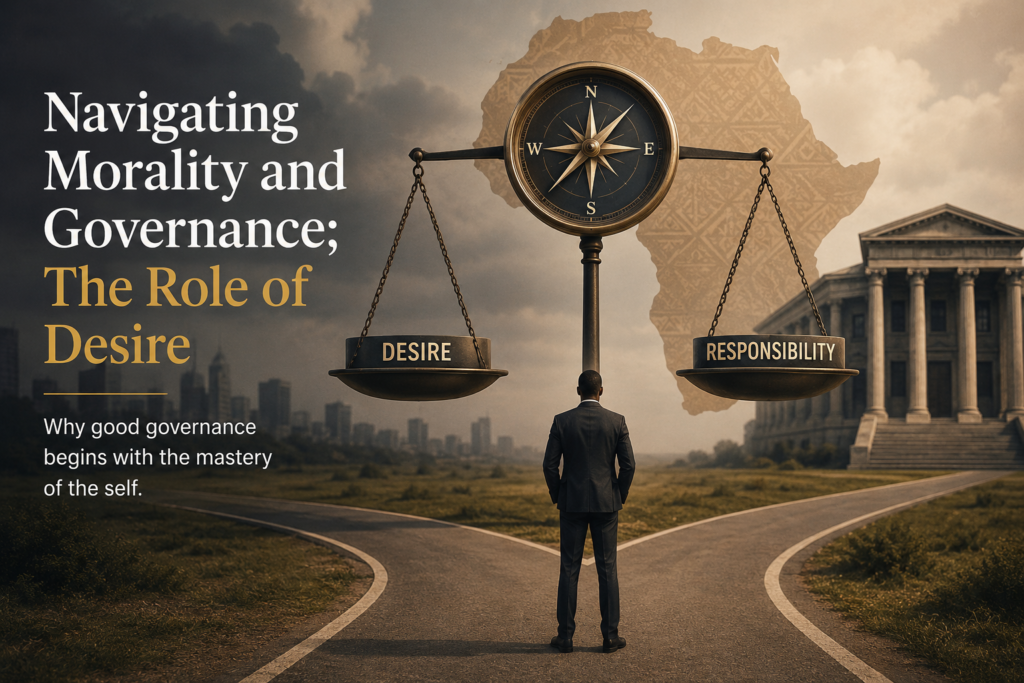
Introduction
Governance is moral governance. Think about it. Behind all that fancy talk about how societies ought to structure themselves, apportion power, allocate resources and rights, protect the vulnerable – what’s really at stake is desire. Human want. We want to feel safe. We want to get rich. We want respect. We want freedom. When human want meets governance, you get morality. Lots and lots of morality. In this article, we discuss why morality matters in government. We discuss how desire impacts our moral decision making. We discuss how morals play into public policy. Because if you’re going to put up with society and government in the first place, you’d best understand morality. It matters.
The role of moral values in governance
Without moral values our system of governance would mean nothing. Our government institutions would lose any claim to legitimacy and would quickly fall into corruption, dictatorship, and eventual destruction. The governments that preceded us throughout history realized that laws and regulations without a moral basis could not stand and defined their system of governance with morality from religion, philosophy, culture, and nature. Ancient Greek philosophers used virtue ethics to describe good governance and concluded that to govern others in a moral way one must have virtues such as wisdom, courage, temperance, and justice. Plato in his book, ‘The Republic’, thought we should be governed by philosopher kings because they have the intelligence to know what is in the best interest of the people. Aristotle carried these ideas further to say that humans should govern other humans because we have the unique capability to reason what it means to live a good life. Human goodness is tied to morality and our ability to reason allows us to live together in political communities to achieve eudaimonia. Many modern western governments also establish systems of governance based on moral principles. Our moral principles are often framed in terms of rights, liberty, and social contracts. John Locke talked about natural rights and government’s moral obligation to protect these rights. Jean Jacques Rousseau believed in liberty and consent to rules set by the majority. Immanuel Kant had a very different approach, but maintained that we have moral obligations to all people. From these morals came our constitution that helps define American government. The Constitution and our Bill of Rights secure our right to freedom of speech, due process, and equal protection. Moral ideals can change as we learn more as a people and discover new information that opens our eyes to new moral understandings. Slavery used to be accepted by many but now thanks to moral progress we recognize that it is immoral and violates human rights. Many people were not allowed to vote but now we recognize that all people should be allowed to exercise their right to vote. Moral rights for the LGBTQ+ community are constantly improving as society strives to understand more about sexuality and moral rights. Moral change can cause conflict in a society but that does not mean those people are immoral.
Desire and its implications for governance ethics
Desire is a primal instinct. It drives nearly everything that we do. We desire to eat. We desire to drink. We desire to reproduce. We desire comfort. We desire security. When it comes to the ethics of governance, desire is a profoundly destructive force if left unchecked. We can desire power. We can desire money. We can desire to be superior to those around us. We can desire to dominate. When governance systems are left unchecked by countervailing forces, the people charged with managing these systems can be led to act unethically by their desires. The desire for more power can result in authoritarian governments. The desire for money can lead to corruption and cronyism. The desire to believe that one’s ethnic group or nation is superior can lead to racism, xenophobia, and genocide. We could spend all day listing examples in human history where systems of governance that were founded on very high moral principles were corrupted over time—or in moments—by those in power acting on their desires. Desire, of course, is not exclusively or inherently immoral with respect to governance. We can desire to do what is right. We can desire peace. We can desire better lives for ourselves and our families. It’s that last desire that fuels most of democracy. But how can we hope to prevent those desires from being subsumed by the desire for power, money, or dominance? The key is channeling desire. Because we can’t put people into positions of power who have no desires. We shouldn’t. Desire is what motivates us. It’s how we learn. It’s how we bond with others. It’s what drives society forward. Rather than seeking to eliminate desire from governance, we should instead seek to use morality to channel desire. To do this, we need what Aristotle described as practical wisdom. Practical wisdom is the virtue that allows us to determine what is morally appropriate in any given situation. Applied to governance, practical wisdom means that we as public servants must learn to recognize when our desires may be leading us down unethical paths. We must have the strength of character to refuse to take the path of least resistance. We must hold our fellow public servants accountable for their actions and create institutional cultures where abusing your power for personal gain is met with severe consequences.
Moral considerations in shaping governance policies
Government policies are practical applications of ethics. The design of a given policy can reflect ethical considerations such as empathy for the least fortunate when a government provides social welfare programs. It can value knowledge, opportunity, and upward mobility when funding public education. It can ignore the basic needs of the poor, allow suffering to dole out healthcare, or turn a blind eye to bigotry when leaving people to languish in poverty, allowing healthcare to be purchased only by those who can afford it, or refusing to condemn hate crimes perpetrated by police. Ethics influences public policy both clearly and indirectly. For instance, ethics is clear-cut on issues like the death penalty, abortion, drug legalization, immigration rights, and foreign military intervention. In such areas where lines are drawn, multiple sides exist that apply different moral ideologies like utilitarianism, deontology, virtue ethics, religious views, etc. As such, when a politician is deciding what policies to support, they must take into consideration the morality of the opposite side. Again, this is true even if they do not agree with that morality. Less obviously, public policies can favor particular moral worldviews through their implementation details. Spending on public transportation rather than highway infrastructure favours the moral ideologies that value environmentalism, the economic empowerment of the working class, and connected communities. Tax policy can imply ethical values by taxing certain things more than others. For example, by imposing a lower tax rate on capital gains than on income from labor, the government implies that earning money from wealth is more morally acceptable than earning money from work. The ways in which a government measures its success can also have moral consequences. Focusing on GDP, unemployment numbers, and incarceration rates each allow politicians to ignore the ethical implications of how a society makes everyone live. Public officials should practice having moral discussions about the policies they produce. They can do this by speaking to their constituents, learning about moral philosophy, and trying to hold themselves morally accountable.
The intersection of governance and individual desires
The tension between governance and human desire runs deep. Liberal democratic theory has struggled for centuries with the appropriate extent to which the government should control or deny human desires for the sake of “the common good”. There are various philosophical arguments about this. One of the more persuasive ones comes from John Stuart Mill and his articulation of the harm principle. I happen to agree with Mill and believe that allowing humans to pursue their own desires, without imposing those desires on others, is the ideal. But even this view doesn’t give us easy answers. What about when our desires to smoke or eat unhealthy food or participate in risky personal behavior endangers the health of our society at large, since we pay for healthcare? What about censoring people’s desires to stay private when terrorist attacks are a legitimate concern? These questions become thornier still when applied to the real world; different democracies will answer them differently. But what we can say with certainty is that governance cannot be about desire. Governance that merely collects and acts upon the desires of the people will notfilter out unjust desires, reach consensus on moral questions, or solve problems that require some sacrifice from the individual for the betterment of the group (i.e. man vs. collective action problems like climate change). However, governance that is completely indifferent to human desires at best becomes authoritarian, and at worst censors human desire outright. Ideally, governance frameworks allow for a constant conversation between our desires and our moral codes. Ideally, there would be forums for our desires — democracies, activism, public spaces, music, etc. — that would allow us to process them and act upon them if they are determined to be morally acceptable by whatever system we agree upon.
Addressing moral dilemmas in the context of governance
Governments regularly confront moral dilemmas. By “moral dilemma” I mean a choice between options that are all morally costly in some way, and for which there is no consensus answer as to which is morally right. Some examples of moral dilemmas familiar in the life of governments include: how to balance liberty and security; how to decide who should get a scarce resource when everyone has an equally legitimate claim; how to act to correct injustice abroad when doing so may cause innocent suffering; and how to balance the interests of current and future generations in our environmental and fiscal policy. The pandemic has brought moral dilemmas into sharp relief. Leaders had to choose between saving lives and preserving jobs; between imposing lockdowns that curtailed freedom and allowing widespread death to occur; between prioritizing the elderly and vulnerable and keeping schools open for children. There are no easy answers to such dilemmas. When confronting a moral dilemma, better public policymaking requires humility about the limits of policy (“it can’t be both A and B”) as well as honest assessment of the moral tradeoffs at stake (“but it can be more of A or more of B, if we make the right policies”). It also requires democratization of the policy process to the greatest extent possible such that those who have a stake in the policymaking decisions can have their voices heard and taken into account. Finally, it requires moral responsibility — actual leadership that is willing to make hard choices, articulate the moral principles behind those choices, and live with the results. Moral dilemmas also highlight the importance of institutional features that allow governments to better “weather” moral dilemmas. Democracies that maintain a culture of ethics and integrity; states that have clear constitutional norms; governments that ensure diversity in their deliberative processes are more likely to make consistent decisions when confronting moral dilemmas, and less likely to fall into inaction or moral whim.
Balancing desire and ethical decision-making in governance
Governance by definition involves desire. The people desire protection, wealth, health care, education, clean air and water. Politicians desire power and prestige. Lobbyists desire subsidies and tariffs. In every facet of governing, desire must be held in check by what is ethical. You can’t please everyone and allow everyone to have what they want. Governing involves taking actions that will please the majority or as many groups as possible while still holding true to what you believe is right. People get into office with promises. Promises are formed by what people want. But if you allow people to simply do what they want, nothing will get done. If a politician wants to get re-elected, they will pander to the people and not make the right decisions with environmental policy. If a lobbyist wants to keep their job they will push their company to alter public lands into drillable areas. If voters want lower taxes, they will elect politicians that promise this without any structural plan on where the money will come from to balance the budget. Balancing what people want and what is ethical can be done through deliberative democracy. In deliberative democracy, there is public reasoning between citizens and the government on what is best for the people. Through public reasoning, everyone gets to voice their opinions and concerns. Decisions are then made that don’t simply satisfy what people want, but what is fair and reasoned. This balance can be achieved by having checks and balances such as an independent judicial system, free press, activist groups and a professional civil service that allows for the people to have their wants heard but limit any one group from fulfilling their desires at the expense of someone else.
Conclusion
Wisdom AND Desire are two sides of the same coin. I don’t think you can have the one without the other. Wise governance unchecked by desire is empty. Desire unchanneled by governance is destructive. Politics…the art of governing a people, is about striking the balance between the two. Of course, finding that balance is hard. It’s hard because people have been vying for power over other people since the dawn of time. And it’s hard because we as individuals are often confused about what we want, or we want things we know we shouldn’t want. That’s why we need governance. We need guard rails on the road of desire. But who sets up the guard rails? Who watches the watchmen? It all comes back to people – informed citizens who care about truth, justice, and the good life.
Vincent Ohwojero Consulting Ltd
Director & Principal Consultant
Governance | Systems Redesign | Development
📧 info@vincentohwojeroconsulting.com
Beyond my core advisory services, I author a weekly serialization titled “The Incomplete Rebellion: Colonialism, African Identity, and the Inconsistency of Selective Decolonisation.” This ongoing project maps the 30 structural, psychological, and economic frontiers of modern colonialism holding African institutions back.
Read the Weekly Series: Join a global network of governance professionals, policymakers, and researchers by subscribing for free directly on Substack.
Consulting & Strategy: To discuss institutional design, sport governance frameworks, or public sector advisory partnerships, explore my [Consultancy Services] or get in touch via the Contact Page.